
You probably need this if…
- Your production plan is a spreadsheet that assumes infinite capacity.
- You find out about a material shortage when someone walks to the rack.
- Standard costs were set once and nobody has revised them since.
- Work-in-progress value is an estimate, and the auditor has noticed.
- Engineering changes reach the shop floor by word of mouth.
- You quote from a cost you can't trace to a bill of materials.
What's already built
Modules configured
Manufacturing orders and work orders, routings and work centres with finite capacity and calendars, multi-level BOMs with phantoms and by-products, quality control points, maintenance for work centres, purchasing with lead times and supplier calendars, inventory with lot and serial traceability, and accounting with perpetual inventory and WIP.
Automations running
MRP regeneration on a schedule, shortage detection driven by the plan rather than by minimum levels, purchase requisitions with need-by dates, work-order sequencing against finite capacity, backflush of components on completion, scrap and yield capture, WIP valuation posting, cost roll-up on BOM change, and engineering change control with effective dates.
AI agents
Demand forecasting from order history and pipeline; a variance explainer that attributes actual-versus-standard cost movement to price, usage, yield or labour; predictive maintenance signals on work centres from downtime history.
Reports and documents
Work orders and travellers, costed BOM with roll-up, actual-versus-standard variance by build, OEE by work centre, scrap and yield analysis, WIP valuation agreeing to the ledger, and traceability from finished serial back to raw lot.
The system, before we touch it
The master production schedule against finite capacity
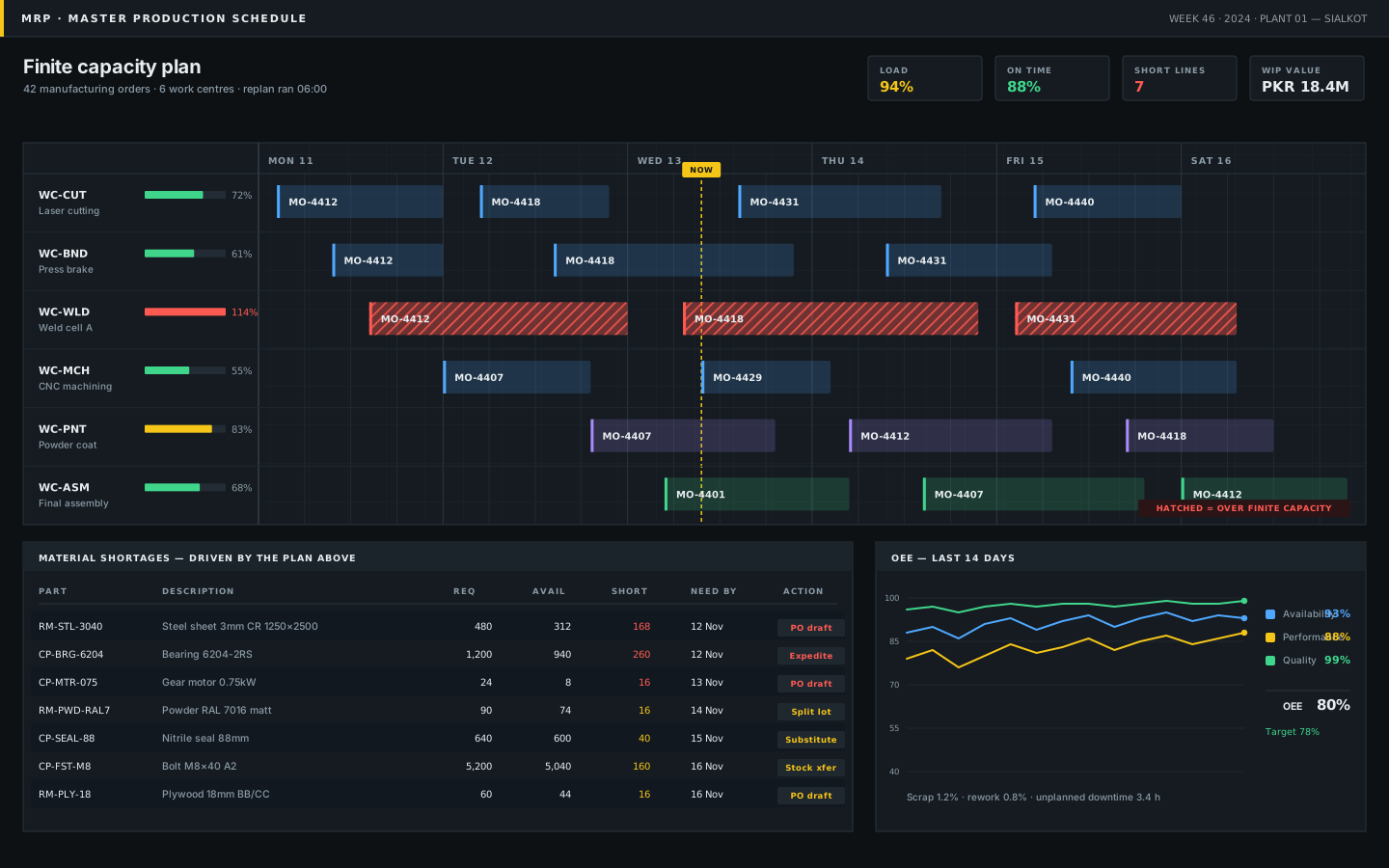
Six work centres, each with its load, the week laid out in hours, and manufacturing orders as blocks — hatched where the plan exceeds what the work centre can physically do. Underneath, the shortages that plan creates, with need-by dates and the action for each, plus OEE over the last fortnight broken into availability, performance and quality.
A four-level bill of materials, costed through
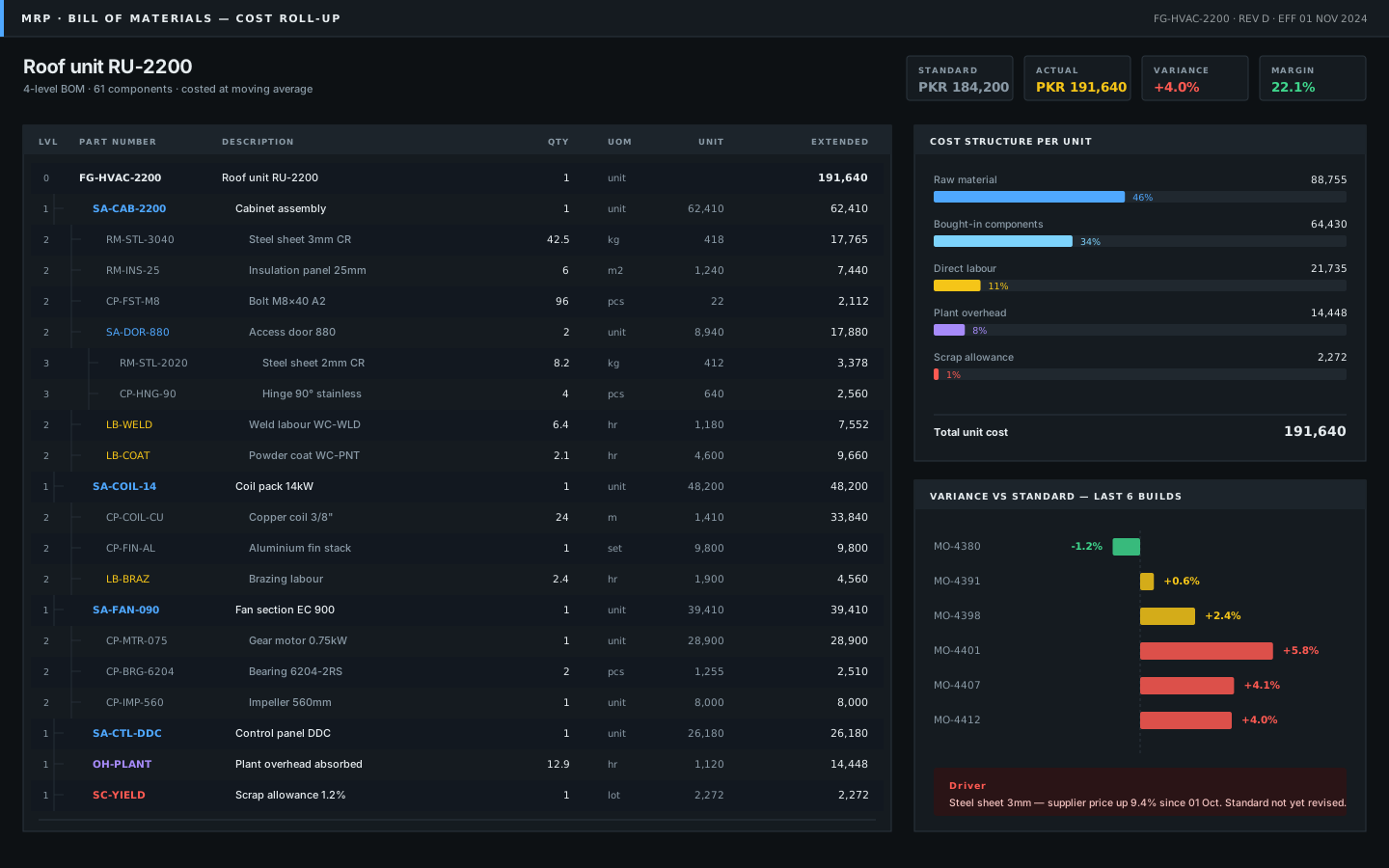
The cost rolled up through every sub-assembly, including labour at work-centre rates, absorbed overhead and a scrap allowance. On the right, the cost structure per unit and the variance against standard for the last six builds — with the driver named: a steel price that moved 9.4% while the standard didn't.
Illustrative data. Your instance is configured to your entities, currency and chart of accounts.
What we tailor
Your BOM and routing structure, work-centre calendars and capacities, your costing method (standard, average or FIFO), overhead absorption basis, quality control points and their criteria, lot and serial policy, and engineering change process.
Put a finite-capacity plan into production before the routings are true. A plan built on optimistic cycle times is worse than no plan, and we'll spend the time to measure them.
Weeks to live, in phases
Typical first line live in 12–16 weeks. BOM data quality is almost always the critical path — we plan for that rather than discovering it.
Connects to
What it moves
- Schedule adherence
- On-time-in-full to customers
- Capacity utilisation
- Material shortage incidents
- Actual-versus-standard variance
- Scrap and rework rate
- WIP value
- Inventory turns
We baseline each of these in the fit review so the change is provable rather than asserted.
Yours at the end of the engagement
- The production system
- BOMs and routings as structured data you own
- Custom modules in your repository
- The costing model and its assumptions documented
- Work instructions
- The reporting layer
Relevant experience
Independent build-versus-configure evaluations for clients choosing between custom platforms and standard ERP manufacturing modules.
Full Odoo roll-out across work orders, inventory, sales, purchase and accounting for an industrial maintenance partner (Pakistan).
Large-scale data pipeline engineering for operational reporting, including experience from Rakuten (Japan).
Common questions
Odoo MRP against a dedicated MES — is it enough?
For discrete manufacturing up to moderate complexity, usually yes. For high-speed process manufacturing with tight machine integration, Odoo is the ERP layer and you keep a MES underneath it. We'll tell you which case you're in during the fit review, and we have no incentive to say otherwise.
Our BOMs are in spreadsheets and they disagree with each other.
That's normal, and it's the real project. We load, compare and reconcile them with your engineers, and the disagreements become a documented decision log rather than a silent overwrite.
Can we cost by job as well as by product?
Yes. Make-to-order and project manufacturing both roll up to job level, with material, labour and overhead attributed to the job rather than absorbed into a standard.
What about engineering changes mid-production?
Change control with effective dates is part of the blueprint. Orders already released keep their revision; new orders take the new one; the cost impact is visible before you approve the change.