
You probably need this if…
- Clinical records, stock and billing live in three systems that don't reconcile.
- Expiry is managed by someone walking the shelves with a clipboard.
- Cold-chain excursions are discovered later, if at all.
- Claims are rejected for coding and documentation reasons you only see in aggregate.
- Controlled drug registers are on paper.
- Preparing for an inspection means a fortnight of assembling evidence.
This is an operational platform — scheduling, supply, billing, procurement and compliance evidence. It is not a substitute for a certified electronic health record where your jurisdiction mandates one, and we integrate with yours rather than pretending otherwise.
What's already built
Modules configured
Appointment scheduling by room, clinician and resource; encounter records with structured consultation, orders and dispensing; inventory with lot, batch and expiry control; cold-chain monitoring; controlled-substance register with dual sign-off; procurement with approved-supplier lists; billing with payer and package pricing; and accounting configured for multi-site clinics.
Automations running
Check-in to room-board updates and wait-time tracking, encounter-driven consumable depletion, expiry alerts staged by shelf life, cold-chain excursion detection opening an incident automatically, reorder points recalculated nightly from actual dispensing, claim assembly at day close with completeness checks before submission, consent capture enforced before procedure, and access reviews scheduled with leaver revocation prompts.
AI agents
Demand forecasting for consumables and vaccines from encounter history and season; claim-rejection prediction that flags likely rejections before submission with the reason; no-show prediction driving overbooking policy where you allow it.
Reports and documents
Room and clinician utilisation, wait-time distribution against your standard, expiry and wastage, cold-chain log, controlled-substance reconciliation, claim acceptance and rejection reasons, revenue per encounter and per clinician, and an inspection evidence pack.
The system, before we touch it
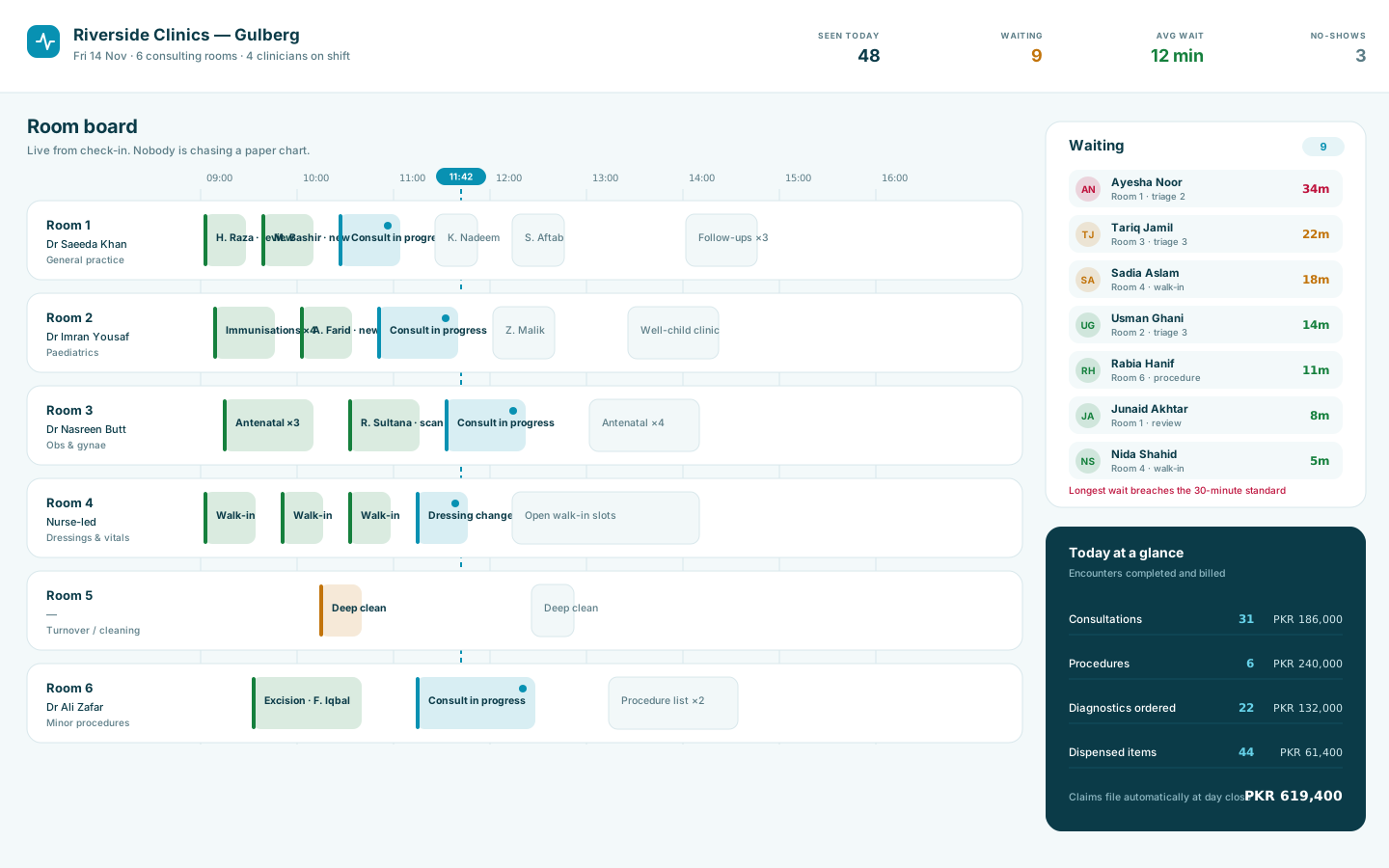
The clinic at 11:42
Six rooms across the working day with completed, in-progress and booked slots, a now-line, and the waiting list ranked by wait time with the breach of the thirty-minute standard called out in red. On the right, the day's completed encounters, what has been billed, and the claim value that will file automatically at day close.
The same clinics from the supply side
Lots with expiry and status, cold-chain temperature over twenty-four hours with a logged excursion and its cause, the audit evidence already collected — consent, prescriber verification, retention, access reviews, open incidents — and procurement driven by what was actually dispensed.
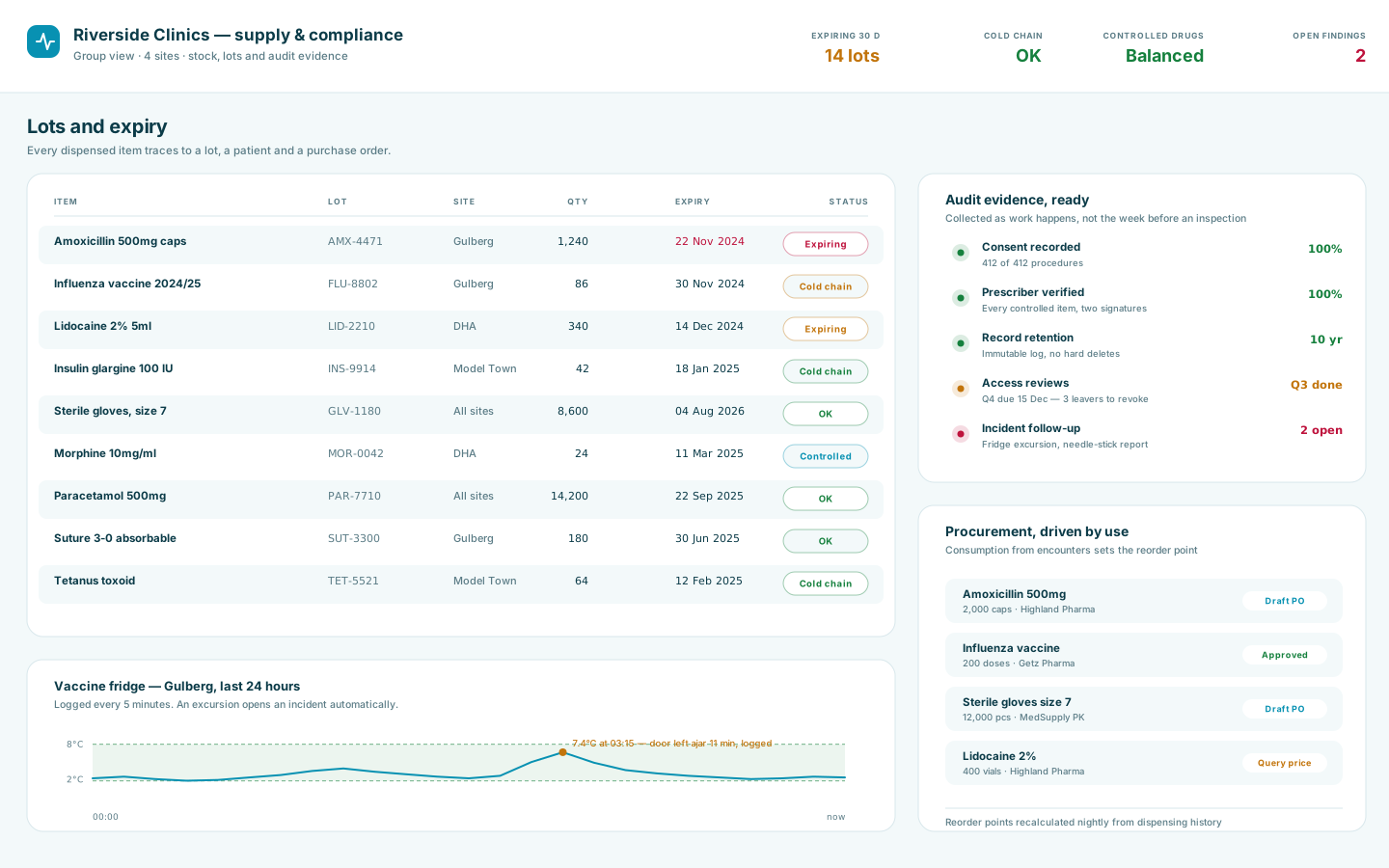
Illustrative data. Your instance is configured to your entities, currency and chart of accounts.
What we tailor
Your service catalogue and pricing, payer and package rules, appointment types and durations, room and resource model, triage categories, formulary and approved suppliers, consent forms, retention policy, and the specific evidence your regulator or accreditor requires.
Hold clinical data in a way that conflicts with your data residency obligations. Where residency requires on-premise, we build on-premise — that's a design constraint, not an upgrade.
Weeks to live, in phases
Typical first clinic live in 12–14 weeks.
Connects to
What it moves
- Average and worst-case wait time
- Room and clinician utilisation
- No-show rate
- Expiry wastage as a percentage of consumable spend
- Cold-chain excursions
- Claim acceptance rate at first submission
- Days to reimbursement
- Open compliance findings
We baseline each of these in the fit review so the change is provable rather than asserted.
Yours at the end of the engagement
- The production system
- The service catalogue and pricing model
- Evidence pack structure and retention configuration
- Integration code in your repository
- Clinical and supply runbooks
- The reporting layer
Relevant experience
Multi-entity Odoo implementation covering procurement, approvals, inventory and accounting for a group with strict access-control requirements.
Three-year IT-controls audit support covering access control, evidence retention and audit readiness.
On-premise Odoo deployments where data residency ruled out cloud hosting (Germany), including a full migration from vendor hosting to client-owned servers.
Common questions
Is this an EHR?
No, and we say so before you ask. It holds encounter records, orders and dispensing for operational and billing purposes. Where your jurisdiction requires a certified EHR, we integrate with it and keep one patient identity across both.
Can it run entirely on our own servers?
Yes. On-premise is a first-class option, not a fallback — with the same CI/CD, monitoring, backup and disaster-recovery arrangements we'd build in cloud.
How are controlled substances handled?
As a register with dual sign-off, immutable logging and reconciliation on a schedule you set. Discrepancies raise an incident rather than an email.
What about patient data protection?
Access control is role-based and least-privilege by default, every record view is logged, there are no hard deletes, and retention is configured to your jurisdiction. We document exactly where each category of data lives before go-live.