
You probably need this if…
- Close takes more than a week and nobody can say which entity is holding it up.
- Approvals happen over email, and the evidence trail is somebody's sent items.
- Duplicate payments have happened, and you found them afterwards.
- Intercompany balances never agree first time.
- Cash forecasting is a spreadsheet rebuilt every Monday.
- An IT-controls audit produced findings you can't close.
What's already built
Modules configured
Multi-company and multi-currency accounting with a shared chart of accounts, accounts payable with three-way matching, accounts receivable with dunning, bank feeds and reconciliation, fixed assets and depreciation, intercompany transactions and elimination, budgets, and a documented close checklist per entity.
Automations running
Invoice capture with OCR and supplier matching, three-way match against purchase order and receipt with configurable tolerances, duplicate detection, approval routing by threshold and cost centre, payment run preparation with bank-detail change controls, automated bank reconciliation, FX revaluation, recurring journals and accruals, intercompany matching, and a close checklist that tracks its own blockers.
AI agents
A Finance Agent that codes and routes invoices, explains why each exception stopped, and improves against your corrections; fraud and anomaly checks on supplier bank-detail changes, unusual amounts and out-of-pattern approvals; a thirteen-week cash forecast from committed payables and confirmed receipts.
Reports and documents
Close cockpit by entity and task, ageing with dispute reasons, cash forecast, consolidated and entity-level statements, audit-ready evidence packs, segregation-of-duties matrix, and an approval log that satisfies an IT-controls reviewer.
The system, before we touch it
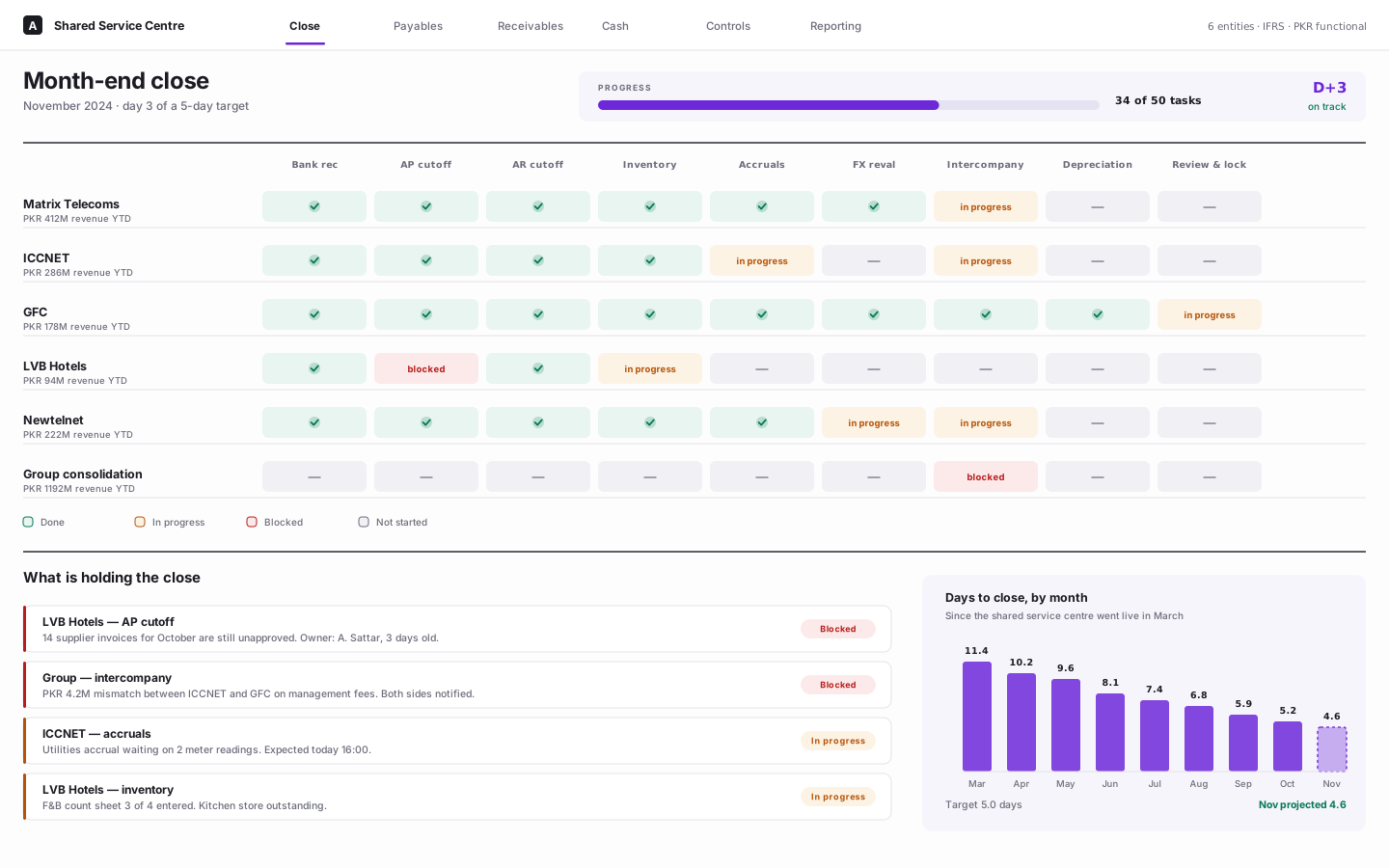
Day three of a five-day close
Every entity against every close task, with blocked and in-progress states visible to everyone rather than living in one accountant's head. Underneath, the specific blockers with an owner and an age each — and on the right, days-to-close by month since the shared service centre went live, because this is a number that should be trending.
The queue that replaces the AP inbox
Of this month's invoices, 94.4% posted without a human. These are the ones that stopped, each with the rule that stopped it, the agent's confidence, and the action. Underneath, thirteen weeks of cash — receipts, payments and closing balance — beside the approval thresholds actually in force.
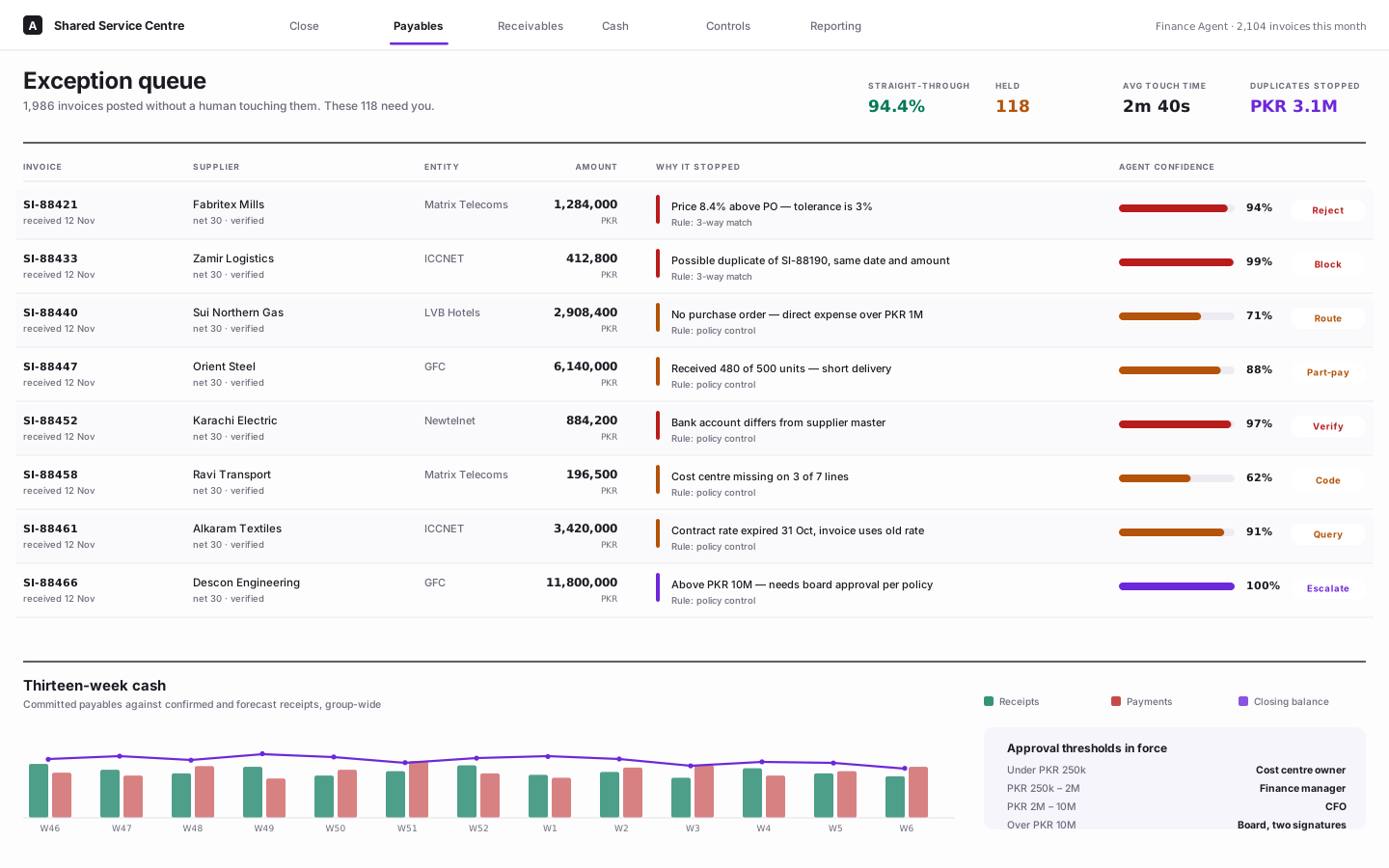
Illustrative data. Your instance is configured to your entities, currency and chart of accounts.
What we tailor
Your group structure and consolidation logic, chart of accounts and mapping, tax and e-invoicing requirements per jurisdiction, matching tolerances, approval thresholds and delegation rules, close checklist and its owners, and the evidence your auditors specifically ask for.
Automate an approval that your segregation-of-duties policy requires a human to make. We'll speed up the route to that human instead.
Weeks to live, in phases
Typical first entity closing on the system in 10–12 weeks. Groups go entity by entity — never all at once.
Connects to
What it moves
- Days to close
- Straight-through processing rate
- Cost per invoice processed
- Duplicate and fraud losses prevented
- Days sales outstanding
- Forecast accuracy at four and thirteen weeks
- Open audit findings
We baseline each of these in the fit review so the change is provable rather than asserted.
Yours at the end of the engagement
- The production system
- The chart of accounts and its mapping documented
- Matching and approval configuration
- The evidence pack structure
- Custom code in your repository
- Close runbooks
- The reporting layer
Relevant experience
Pre-migration ERP audit for an eleven-company telecoms group covering accounting with 1.27M journal lines, five custom modules and five live integrations.
Three-year IT-controls audit support for an advertising and communications group, covering access control, evidence and audit readiness.
Invoice OCR and partner-autocomplete integrations running against live ERP accounting data.
Redesigned procurement and approval workflows during ERP migration for a multi-entity telecoms group.
Common questions
Will the agent post to our ledger by itself?
Only within the rules you set, and never above your threshold. Everything it does is logged against the record with the reasoning attached, and you can turn any rule back to manual without a code change.
Can we keep our existing chart of accounts?
Usually yes, and often we shouldn't. If it has grown into three thousand accounts because nobody wanted to delete one, we'll show you a rationalised version and the mapping, and you decide.
Does this satisfy an IT-controls audit?
The controls, evidence retention and approval logging are designed against what auditors ask for, and we've supported a three-year controls audit on a system we built. It doesn't make the audit automatic — it makes the evidence available without a scramble.
How does the cash forecast handle late payers?
By using their actual payment behaviour rather than their terms. A customer who pays at 62 days is forecast at 62 days, and the difference between terms and behaviour is reported as its own number.