
You probably need this if…
- Aggregator orders arrive on a separate tablet, and someone re-types them into the POS.
- You know your food cost percentage for the month, but not for a dish, and not for a channel.
- The kitchen finds out about a modifier by shouting.
- Stock counts and recipes disagree, so theoretical usage and actual usage never reconcile.
- You suspect aggregator commission is eating a dish's entire margin and can't prove it.
What's already built
Modules configured
Online ordering site with menu, modifiers and scheduling; POS for dine-in, pickup and counter; kitchen display routing by station; inventory with lot tracking and shelf life; manufacturing BOMs used as recipe cards with yield and waste; purchasing with supplier price lists; accounting configured for multi-branch food service.
Automations running
Order routing from every channel to the right kitchen station, depletion of ingredients through recipe BOMs on sale, aggregator commission booked as a cost against the order that incurred it, ticket-time tracking per station, waste capture at the bin, par-level prep lists, and nightly purchase-order drafting from forecast demand.
AI agents
A demand forecast that uses covers history, day-part, weather and local fixtures to set tomorrow's prep and purchase quantities; a menu-engineering analysis that classifies dishes by popularity against contribution; anomaly detection on voids, discounts and comps by till and by shift.
Reports and documents
Recipe cards with costed sub-recipes, plate margin by channel, waste log, station performance, daily flash P&L by branch, theoretical-versus-actual usage variance, and supplier price-change alerts.
The system, before we touch it
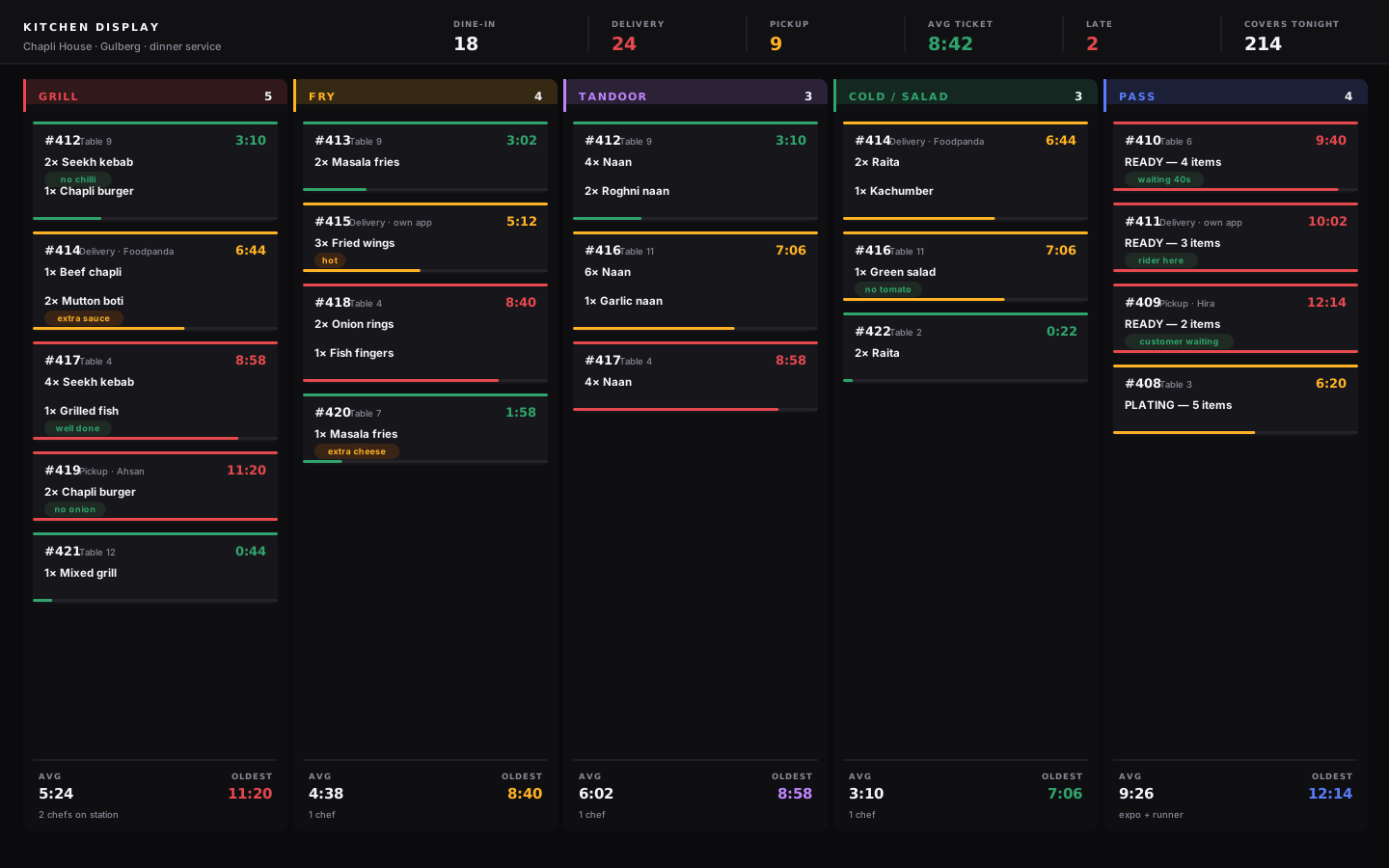
The kitchen display during dinner service
Tickets routed to grill, fry, tandoor, cold and pass, each with an age bar that turns amber then red against your target ticket time, modifiers called out as chips so nobody misses “no chilli”, and a per-station footer showing average and oldest. Dine-in, delivery and pickup all arrive here — the kitchen doesn't care which channel sold it.
The same business seen from the office
A recipe card as a real multi-level BOM, with sub-recipes costed at their own yield and waste applied per ingredient; plate economics for the same dish across dine-in, own delivery and aggregator; the menu-engineering quadrant over ninety days; waste logged at the bin; and tomorrow's prep list with the purchase orders that will raise at 22:00 unless you change them.
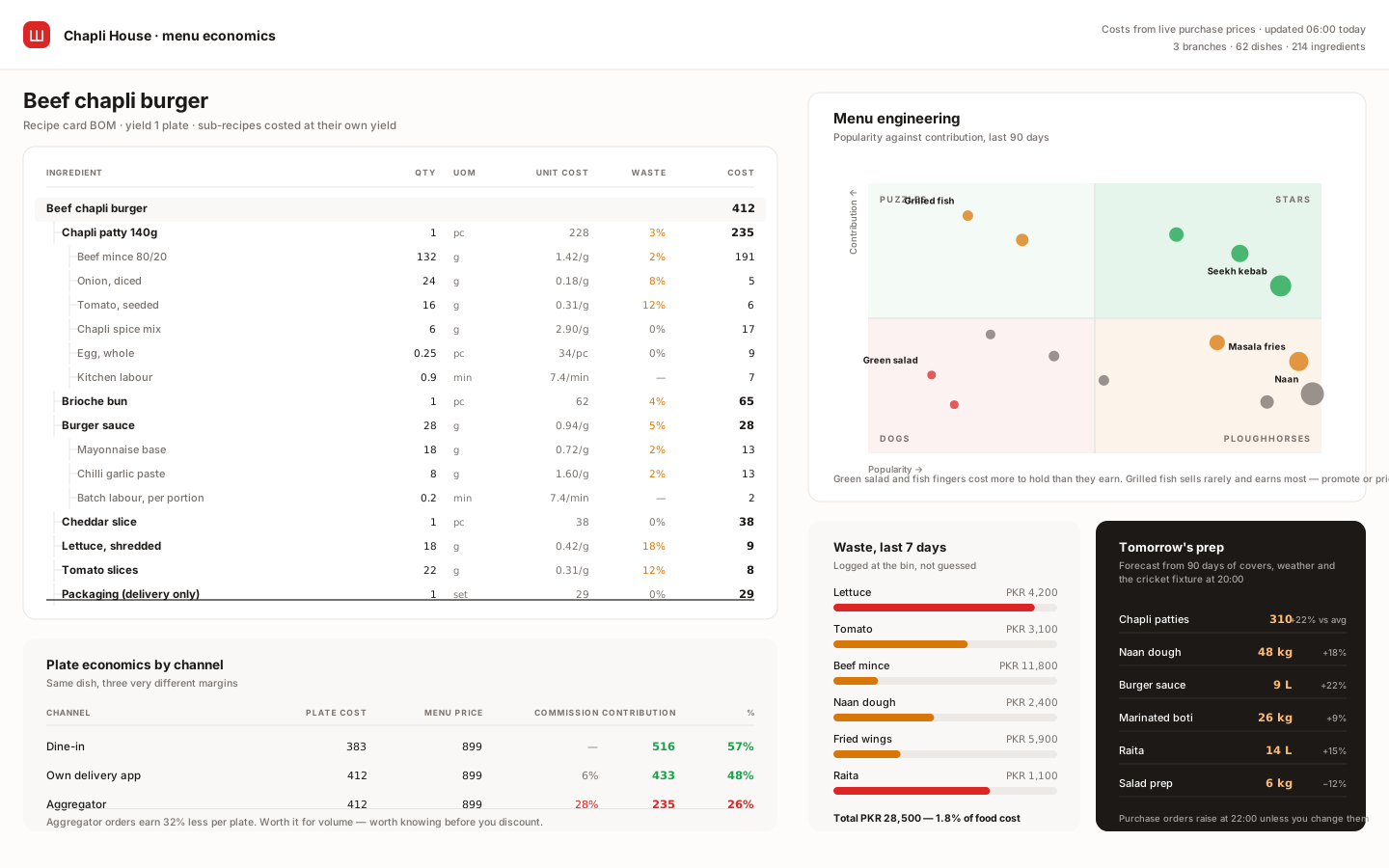
Illustrative data. Your instance is configured to your entities, currency and chart of accounts.
What we tailor
Your menu structure and modifier logic, your recipes and yields, your station routing and ticket-time targets, your branch topology and inter-branch transfers, your aggregator commercials, your supplier price lists, and your chart of accounts. Recipes are entered with your chefs, not copied from a database — yields are the part that makes the costing true.
Publish a plate cost you haven't validated. Costing goes live only after a physical count reconciles against theoretical usage for a full week.
Weeks to live, in phases
Typical first branch trading in 8–12 weeks. Recipe depth is the variable — a 40-dish menu moves faster than a 200-dish one.
Connects to
What it moves
- Ticket time by station
- Order accuracy
- Theoretical-versus-actual usage variance
- Food cost percentage by dish and by channel
- Waste as a percentage of food cost
- Prep over-production
- Contribution per cover
We baseline each of these in the fit review so the change is provable rather than asserted.
Yours at the end of the engagement
- The production system
- Your recipe library as structured data you own
- Connector code in your repository
- Branch and kitchen runbooks
- The costing model and its assumptions
- The reporting layer
Relevant experience
End-to-end operations for a multi-branch fast-food chain (Pakistan) — online orders and POS through kitchen, inventory and accounting in one system.
Connected online orders, POS, kitchen, inventory and accounting into one flow as a business-process redesign, not just an integration.
Invoice OCR and supplier-price automation running against live ERP accounting data.
Common questions
Do we have to replace our POS hardware?
Often not. Most standard terminals, printers and cash drawers work. We check yours during the fit review and tell you what has to change before you buy anything.
Aggregators change their APIs constantly. What then?
Connectors are our code, in your repository, with tests. When an aggregator changes, it's a maintenance task on a system you own — not a support ticket to a vendor who may or may not care.
Can we run this for a cloud kitchen with no dine-in?
Yes. Turn the dine-in POS off and the rest of the blueprint is unchanged. Cloud kitchens usually care more about the recipe and channel-margin layer, which is the strongest part of this solution.
How accurate is plate costing really?
As accurate as your yields and your counts. The system is honest about this: it shows theoretical against actual usage and flags the gap rather than hiding it. Most kitchens are 4–8% out in the first month and under 2% by the third.